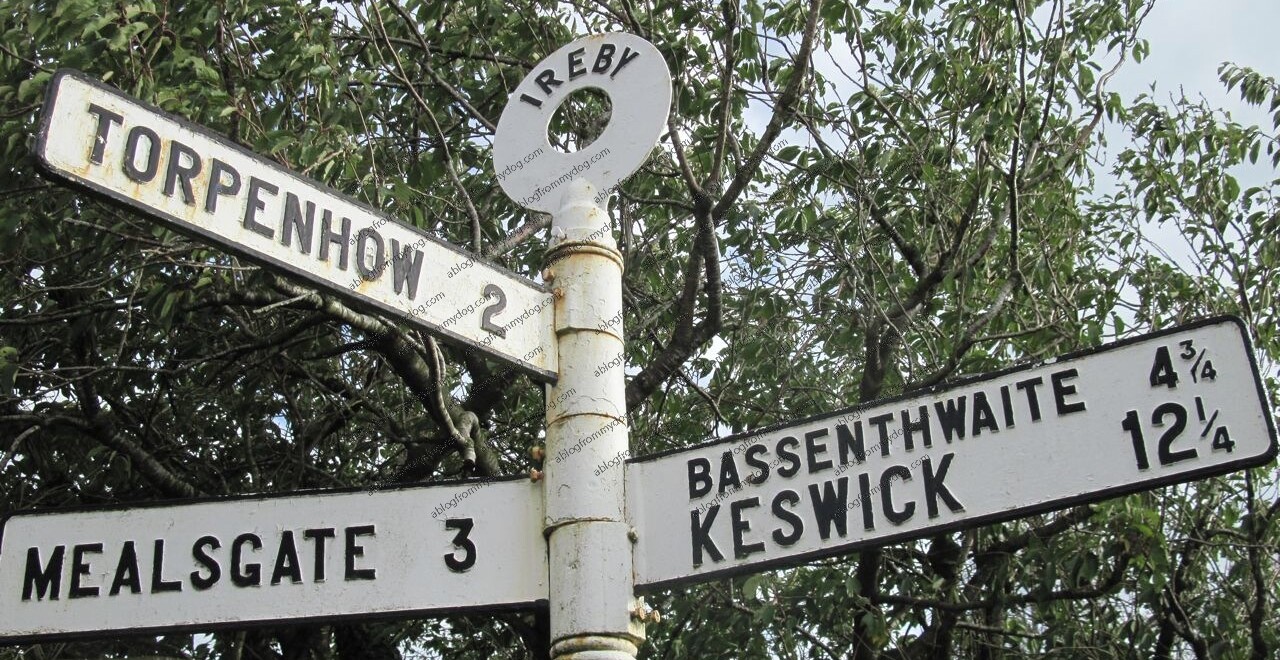
Our adventure yesterday could be best described as a visit to two villages with very different feelings.
Heading west from the city we arrived in the small village of Ireby before we travelled on to nearby Torpenhow.

Ireby is one of those places you have heard about but never visit and, we have to say, we seemed to pack everything in one visit.
Sadly, for the small former market village situated between Wigton and Bassenthwaite it seems stuck in a bit of a timewarp, unsure of what it has and where it can go.
If the village was in the south of England it would be worth millions however ‘in’t north’ it feels as if it is slowly dying.
We parked the car just off the main street in front of a very imposing building which was the former Moot Hall. Mum had to be careful when she opened the car door not to hit the old looking drinking fountain embedded into the wall to our left.
Standing for a moment and looking around we had no sense of focus, so we just headed off to see what we could find.
Around the back of the Moot Hall we came across a very old looking market cross. The steps leading up to the centre column were all braced with metal staples. It was at this point we sort of worked out that, unlike many places we have visited, Ireby did not feature any information boards explaining landmarks or village highlights.

Only when we returned home and searched on the interweb did we discover that the plinth is possibly from the 17th Century with the central column restored at some point in the 19th Century. It is known as the Butter Cross.
The monument, is made of red sandstone and commemorates the granting of a market charter to William de Ireby in 1237 by King Henry III.
Looking up the hill past the school on our right we could not see anything of interest except a few houses and a bit of a steep road, so we headed back to the main street where we came upon a former Wesleyan Chapel, which appears to be a private house.

The next few hundred metres were quite interesting as a number of properties were either very well maintained and highly desirable or quite shabby and in need of quite a bit of money spent on them. One positive example was the former Sun public house which has been turned into a five bedroomed house. It has a sale price of over £630,000.
St. James’ Church
At the edge of the town we came across the local church, St James’. Sat on a raised bit of land it dominates the surrounding area and is quite sizeable given the current apparent size of the village.

Unfortunately it was not open so dad could not go inside, but we did manage to take a good look around outside. In front is the war memorial and to the right is the older cemetery. To the rear, and across a small path is the more modern cemetery.
Only when we returned home did we find out that Ireby is the location for a music festival, held in June and that St James’ church is the ‘new’ church in the village.
The old church it seems is situated slightly outside the village
Off to Torpenhow
With Ireby done, and with time still available for our expeditions, we headed off in the car to Torpenhow.
We have to say that, although it was only two miles away, the road was extremely narrow and at times the grass was growing in the middle of the road.
You could say it was a very unclassified road and dad was worried in case he met anything or anyone coming the other way. Suffice it to say that it would have been difficult at times to overtake a pedestrian.

Arriving in Torpenhow, pronounced Trup-en- ah by the locals, we were greeted by the eau de rural life, or muck as it is also known.
Hot and steamy, the ‘natural fertiliser’ was being loaded into a spreader by a local farmer for distribution on a field nearby.
This village, in contrast to Ireby, instantly felt more open and had pride in itself.

We parked at the entrance to St Michael’s and all Angels Church and headed away from the farm and along the main street.
After a short while we spotted a house with a plaque and sundial on the outside, indicating it was a former Country Towns Mission Hall. We had never heard of this organisation so would be interested if you have any more details about it.
Opposite was a large village hall complete with stage and all modern facilities.
A little further down the street we said hello to a couple of builders renovating a really old building with a very old timber roof.
Mum notices that where the oak beams join together the original carpenters made marks on either side of the joint to help them assemble it.
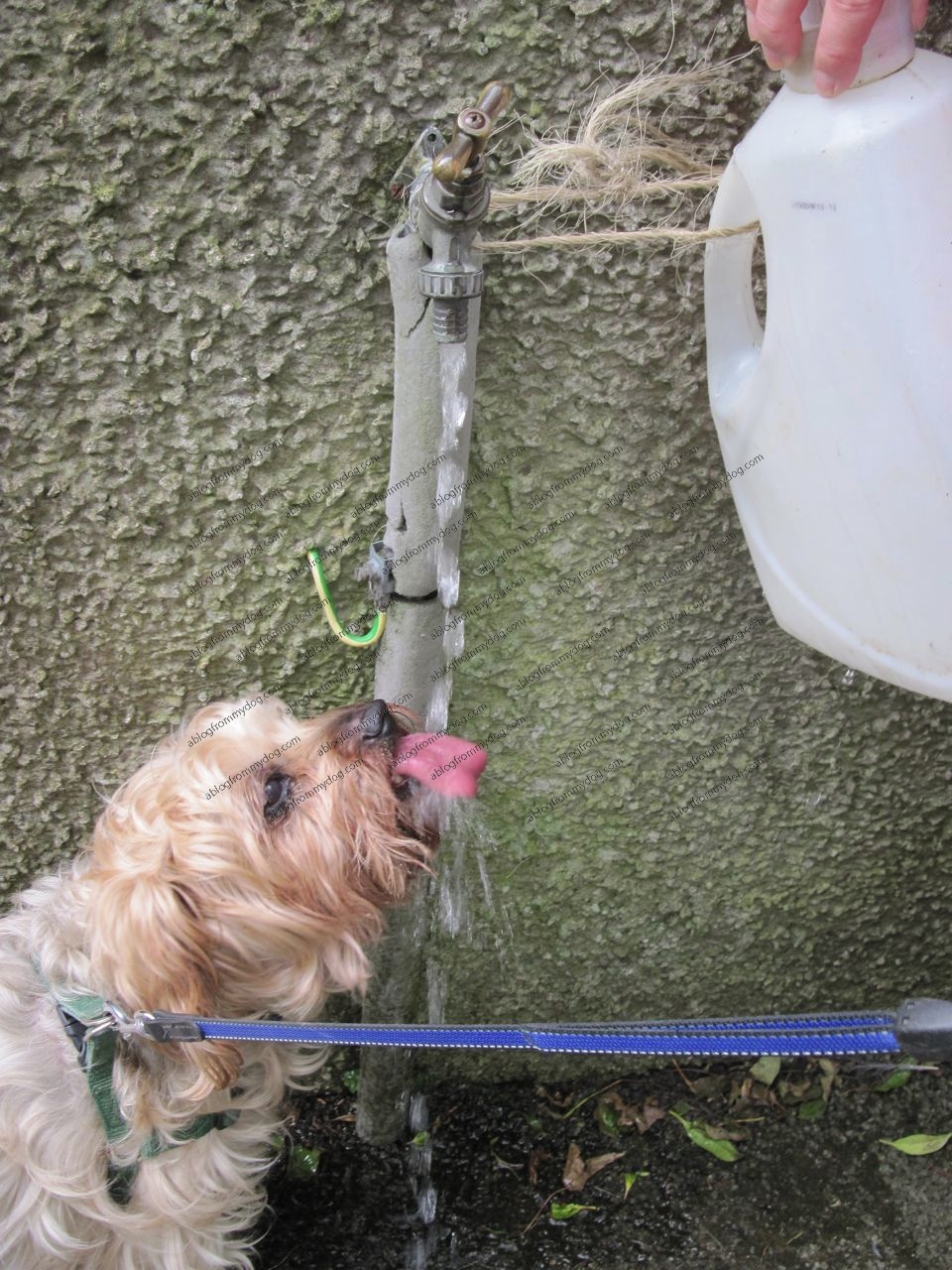
We return back to the church and find a tap full of fresh cool water before we take a look around the churchyard whilst dad takes a peek inside.
It turned out that the church dates back to 1120 and has a Jacobean ceiling which may have come from London in the 1600s.
Photographs taken and sniffers full of new smells we head back home and for once we have not been covered in mud or dirt.
Until next time
Buster and Charlie