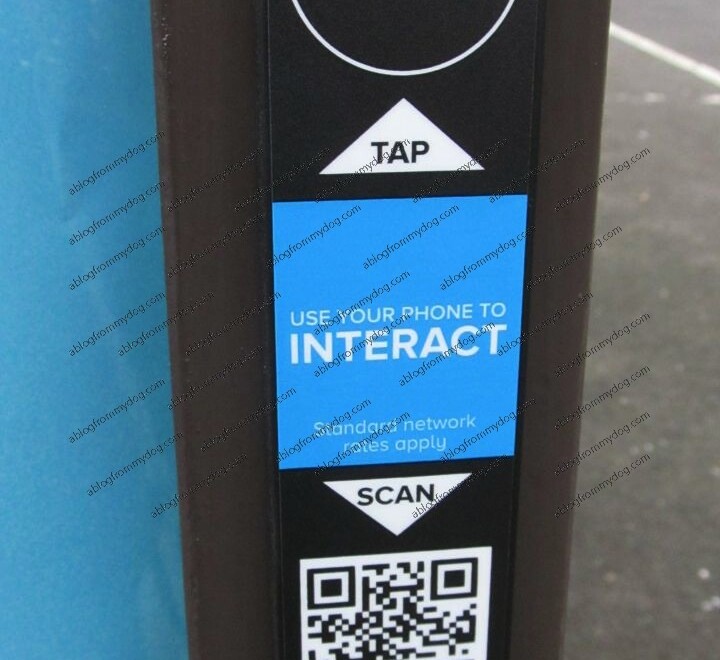
Bus shelters in Carlisle are getting a bit of a technology makeover with the addition of interactive panels alongside the more familiar paper adverts.

Whilst out on a walk over the weekend I noticed a small panel, around 15cm x 4cm, on shelters containing advertising spaces operated by a company called Clear Channel.
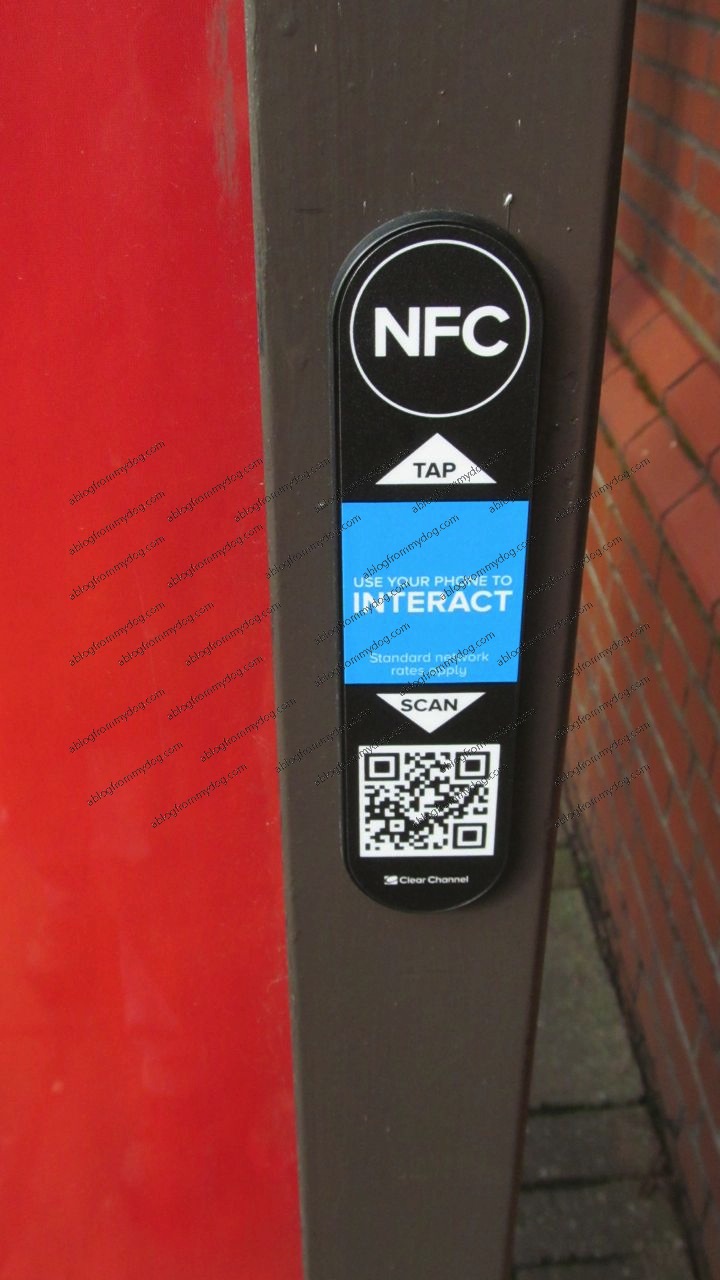
It turns out that the addition of interactive plates to shelters in Cumbria is part of the national roll out of the technology to around 10,000 locations.
NFC and QR codes
Near Field Communications (NFC) and QR code capabilities allow roadside advertising to become an interactive consumer experience whilst the humans wait for their bus.
For those of us who don’t fully understand human gadgetry, Near-Field Communication (NFC) is a wireless gizmothingamebob that allows the humans to make transactions, exchange digital content or connect with other NFC electronic devices using their smartphones.
QR codes are those random dots often found in squares. When scanned with an appropriate reader a website page or other details can be made to magically appear on a phone or computer. You often see them on parcels delivered by the postman.
According to Eagle Eye Technology, the company behind the tech side of the mobile platform, the shelters in Carlisle are part of the world’s largest static NFC advertising network.
Interactive technology
Sadly dad does not have a whizzy phone so we were unable to try out the panels on the roadside. However, we were able to scan the qr code from the photographs at home.
The code took us to a website which showed a banner advert for the Metro newspaper and, right at the top of the screen in a small text link on a blue background, a link to view live bus departures for the bus stop. This is quite a clever trick and would also give the advertisers usage data to that individual bus stop.
Interactive pet stores
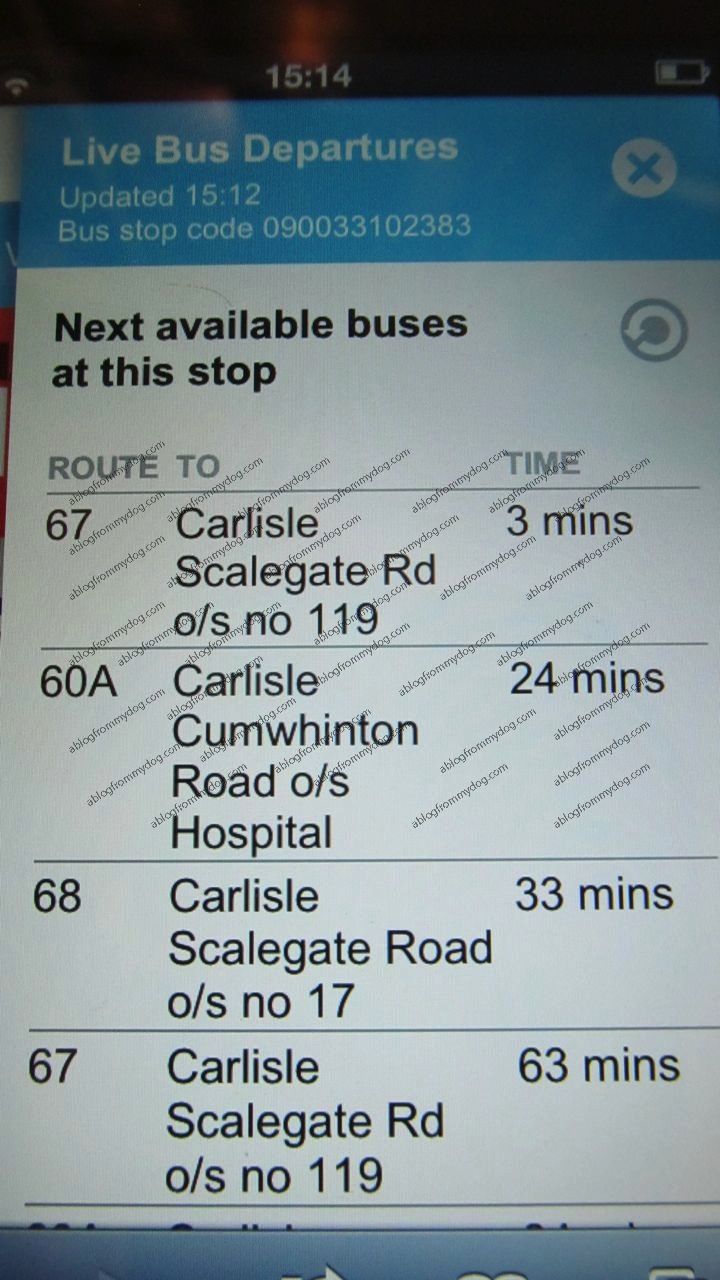
Thinking we should fully test the system we clicked the bus information link and up came a window with the next few bus arrival times for our stop.
Sadly this information was not interactive. It is just scheduled data and does not take account of delays or cancellations.
This is such a shame as it would be great for visitors and non regular passengers to see where the bus routes actually went. This would enable the humans to use alternative services if multiple routes passed by their chosen destination.
Thinking though beyond the initial failings for the humans, this technology could also be used in our world.
Just think if we had an NFC chip on our collars and we went into a pet food store. We could have personalised service and all of our needs cared for as soon as we walk over the doormat.

The computerythings could know all about our favourite foods, or special toys or even how often we need chews.
Mums cupboards need never be empty again. Now, that would be a good use of this technology.
Frankly I am unsure why the humans can’t just lay down at a bus stop and watch the cars and vans go by whilst dreaming about their next visit to the pet food store.
Until next time
Licks and wags
Charlie