
A Cumbrian zebra crossing has had a high tech upgrade with the installation of new low energy beacons.
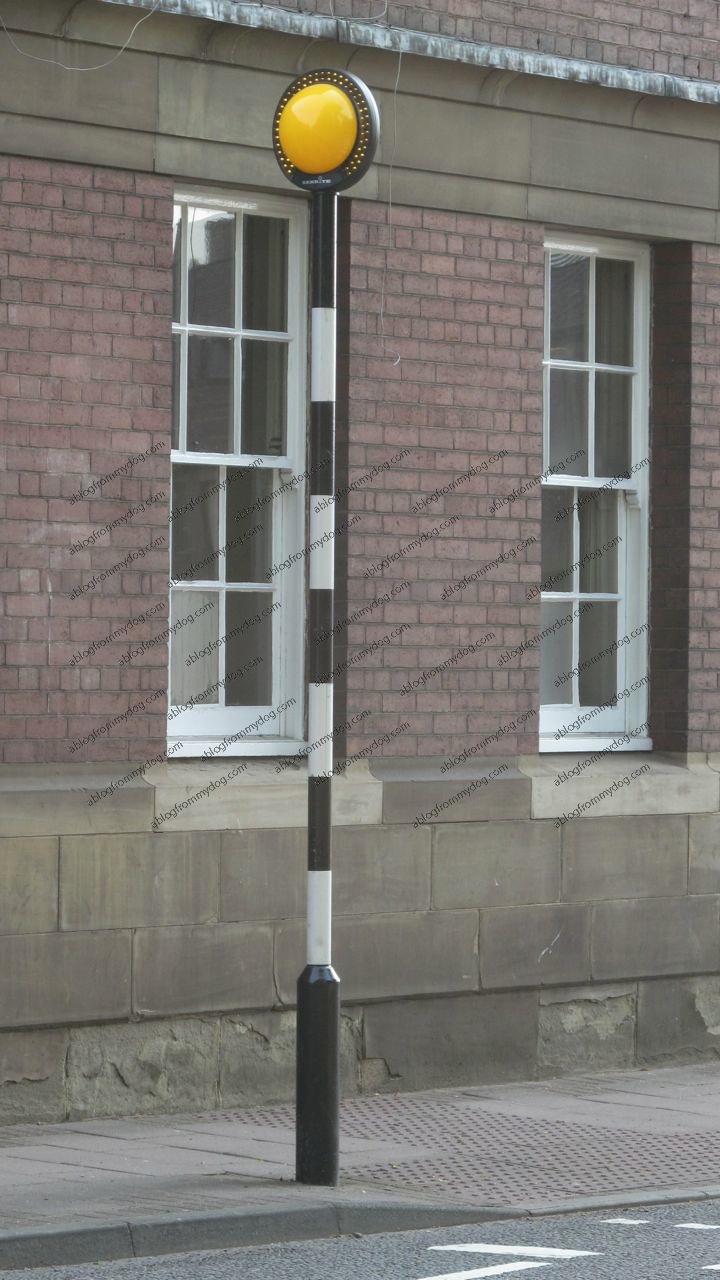
Whilst out for my walk earlier today I spotted that workmen had installed some new Zebrite LED lights to a popular zebra crossing in Carlisle. This is possibly the first upgrade of it’s kind in the City.
Positioned on a very busy junction in the Caldewgate area of the city, the crossing is frequently used by factory workers going to and from the nearby McVities biscuit factory.
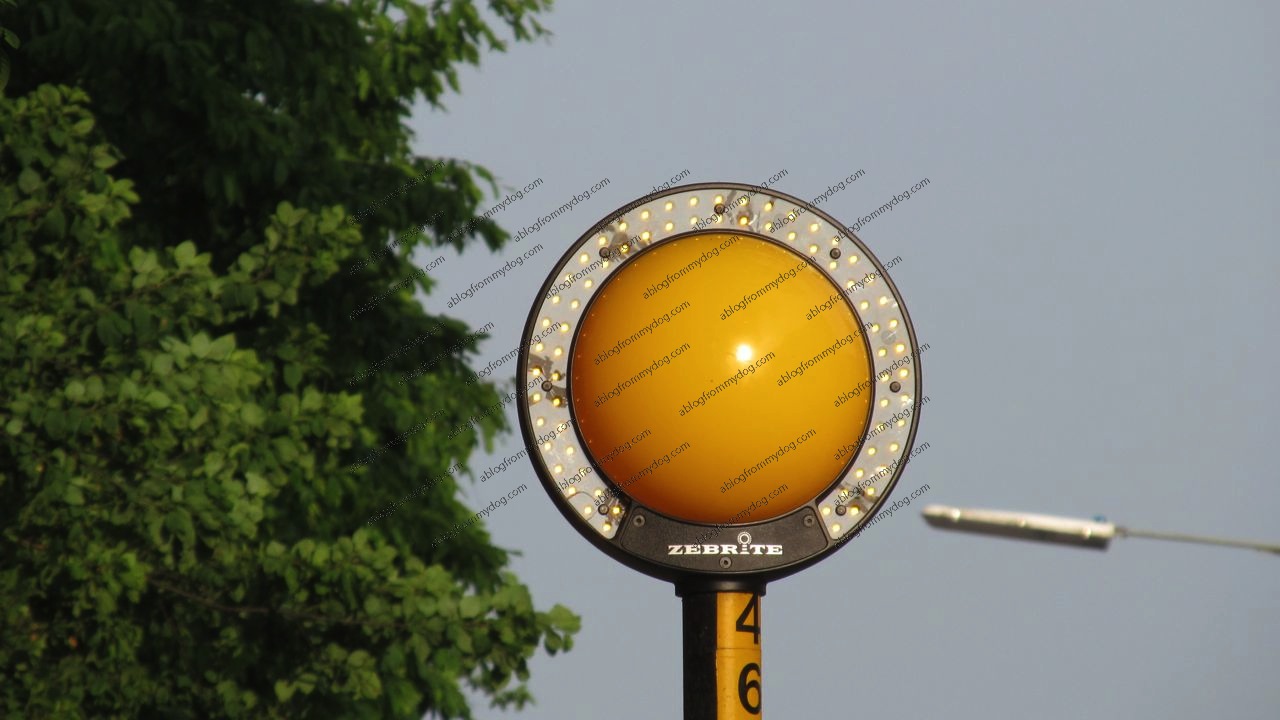
Over the years I have used this Zebra crossing many times and I have to say I am really glad that it has had some work done to make it more visible to motorists exiting the roundabout.
Ultra visible LED’s
Fixed on top of the familiar black and white post is the new LED lamp fitting which, according to the manufacturer, automatically adjusts to local light levels.
The orange flashing halo of light appears to be much brighter than the old flashing orange globe.
This helps to draw attention to the crossing and appears to cut through the general road clutter.
One instant observation with this installation is when viewed from the side or slightly off axis the Belisha beacon appears dark in daylight.
This phenomenon is most noticeable when exiting the Caldewgate roundabout and heading towards Newtown Road. Non familiar road users travelling towards the hospital may still accidentally fail to observe the crossing if concentrating on the junction and other road users.
Only time will tell if this new installation will help preserve one of the last zebra crossings in the City.
Do you know anything about the history of the crossing or of any others in the area? Let me know via the comments area below.
The Belisha Beacon
According to Wikipedia the amber-coloured globe lamp atop a tall black and white pole was named after a former Minister of Transport in Britain called Leslie Hore-Belisha.
The first Belisha Beacon was erected in Wigan on the corner of Mesnes Street, and became operational on 4 July 1935. The road crossings were enhanced with the addition of broad white markings across the road surface in October 1951.
Because they now had a set of black and white stripes on the road to match the ones on the Belisha Beacon poles, they were renamed Zebra Crossings. This started a long tradition of naming new crossings after animals.
Hore-Belisha rewrote the Highway Code and was responsible for the introduction of two innovations which led to a dramatic drop in road accidents: the driving test and the Belisha beacon, named after him by the public.
There are currently five types of formal pedestrian crossings used in the United Kingdom, these being Zebra, Pelican, Puffin, Toucan and Pegasus crossings.

The Pelican : the name comes from the first letters of Pedestrian Light Controlled crossings — but in the UK we changed the “o” to an “a” to keep animal names. These are the ones that have a green or red illuminated figure to signify when and when not to cross. They are activated after the pedestrian presses a button to signify their intention to cross.
At all Pelican crossings (apart from ‘staggered’ crossings) there is a bleeping sound to indicate to the visibility impaired when the steady green man is lit.
The Puffin : Pedestrian User-Friendly Intelligent Crossings. These are currently the crossing of choice in the UK.
These crossings differ from Pelican crossings as they do not have a flashing green man/flashing amber signal.
Technology is also used to identify when the crossing is clear of pedestrians. This allows the traffic to be stopped only as long as is necessary.
A Toucan crossing is designed for both pedestrians and cyclists. These are typically used adjacent to a cycle-path. Mounted cyclists are not allowed to cross the road using Zebra, Pelican or Puffin crossings.
In areas where horses are common a Pegasus crossing maybe installed. These have a red/green horse symbol and higher mounted push buttons to allow horse riders to cross.
More information
Pedestrian crossing – Central Office of Information for Ministry of Transport -Humorous road safety trailer on the correct use of pedestrian crossings
British Road Directory : – Not currently updated
Until next time
licks and wags
Charlie