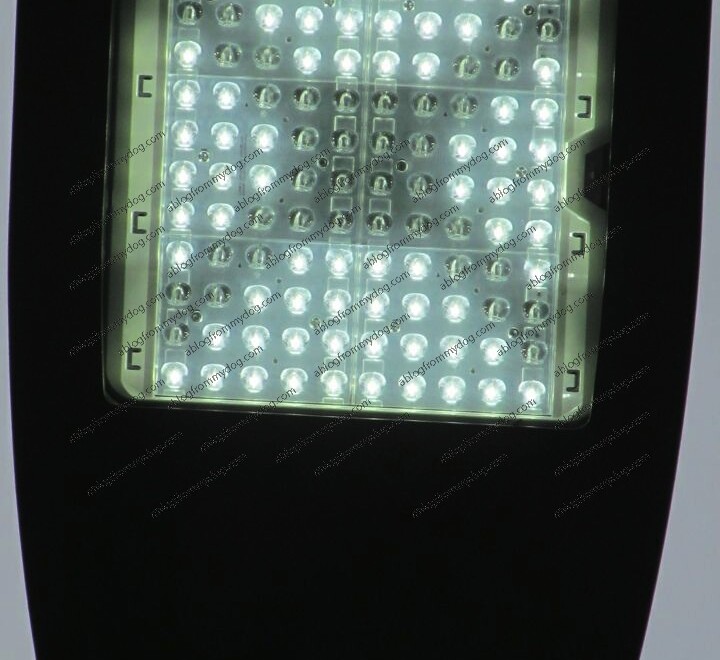
Something of a quiet revolution is taking place on the streets of Cumbria as revolutionary LED street lamps are being installed.

Fixed high on recently installed metal poles the new road lighting is being tested on Wigton Road in Carlisle.
Bright white light beams downward from the thin lamp fittings currently being installed on the road leading to Caldewgate and the McVities roundabout.
Cumbria County Council announced earlier this year that they are investing in the new energy efficient lights as replacements for the existing lighting infrastructure.
According to the Clinton Climate Initiative, street lighting accounts for a staggering 159 terawatt hours of electricity use worldwide each year.
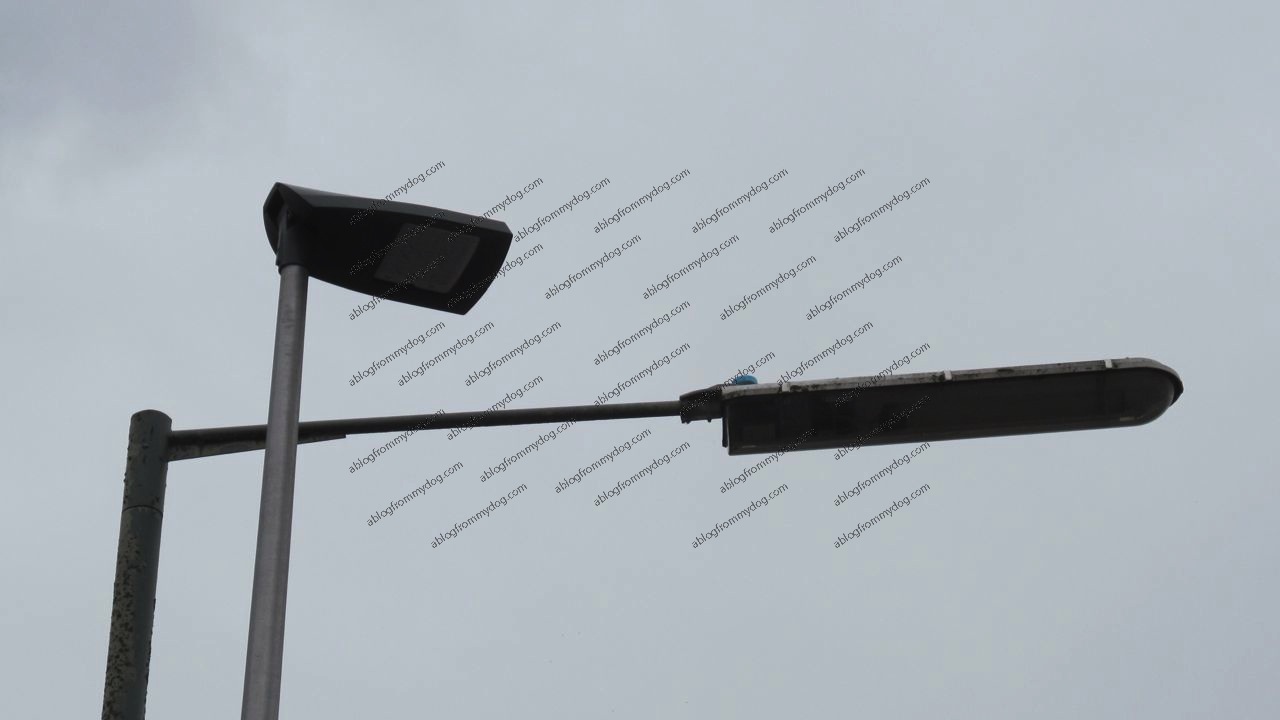
LED street light
Light Emitting Diodes (LED’s) are electronic gizmos that produce a lot of light for the amount of energy consumed. This means that they are more efficient to run, produce less heat and last longer.
Another advantage of using electronics is that the light output of the fittings can now be dimmed at certain times.
For the bean counters in council offices it is almost a dream come true as they can claim savings, reductions in pollutants and many other headlines depending on what budget they wish to comment on.
However, the new lighting is not without it’s critics. A growing number of articles are being published on the internet and elsewhere complaining about the perceived brightness of the LED lights in residential areas.
Some critics also point to the intense blue-white light producing more light pollution that older ‘yellow’ lights.

The first street to be lit by an incandescent lightbulb was Mosley Street, in Newcastle upon Tyne, UK. The street was lit by Joseph Swan’s incandescent lamp on the 3rd February, 1879.
In the United Kingdom there is a legally enforced lighting-up time, defined as from one half-hour after sunset to one half-hour before sunrise, during which all motor vehicles on unlit public roads (but not parked) must use their headlights.
Whatever your point of view the LED street light is here to stay, at least for the foreseeable future as millions of pounds are being spent in the UK alone.
What are your thoughts on the new LED street lights? Let me know in the comments area below.
Until next time
Licks and wags
Charlie
Street light fact file:
- Incandescent bulbs – The old fashioned lamp with the twisted metal filament that glows. Often found in rough use areas where a cheap bulb is required. They are highly inefficient compared to the modern lamp.
- High Intensity Discharge (HID) Lamps: include Metal halide lamps and High Pressure Sodium lamps (HPS).
- Metal Halide Lamps – These operate at high temperatures and pressures. They produce a very white light often seen at sporting venues. They take a few minutes to reach full brightness.
- High Pressure Sodium (HPS) lamps – are one of the more popular street lighting options. These can often be recognised as the yellow street lights.