
Unclassified and forgotten U123 in Carlisle is an amazing street with a story to tell.

I found this old street whilst out on one of my walks and every day thousands of people pass by a narrow single track road to the west of the city centre without a second glance.
Linking Church Street, by the biscuit factory where the yummy sniffs come from, to the B5299 in Shaddongate, Broadguards is possibly one of the oldest streets in this part of the City of Carlisle.
Broadguards, Carlisle
Officially the road is known as the U123, an unclassified road. It is a little unloved and battle scarred.
Patchwork tarmac intermingles with the old cobble stone setts creating a timeline of the industrial revolution.
Lining the street to one side are a number of modern industrial businesses including a garage and a metal fabrication facility. On the other a patchwork brick built wall captivates in stone the changes to this part of the old town.
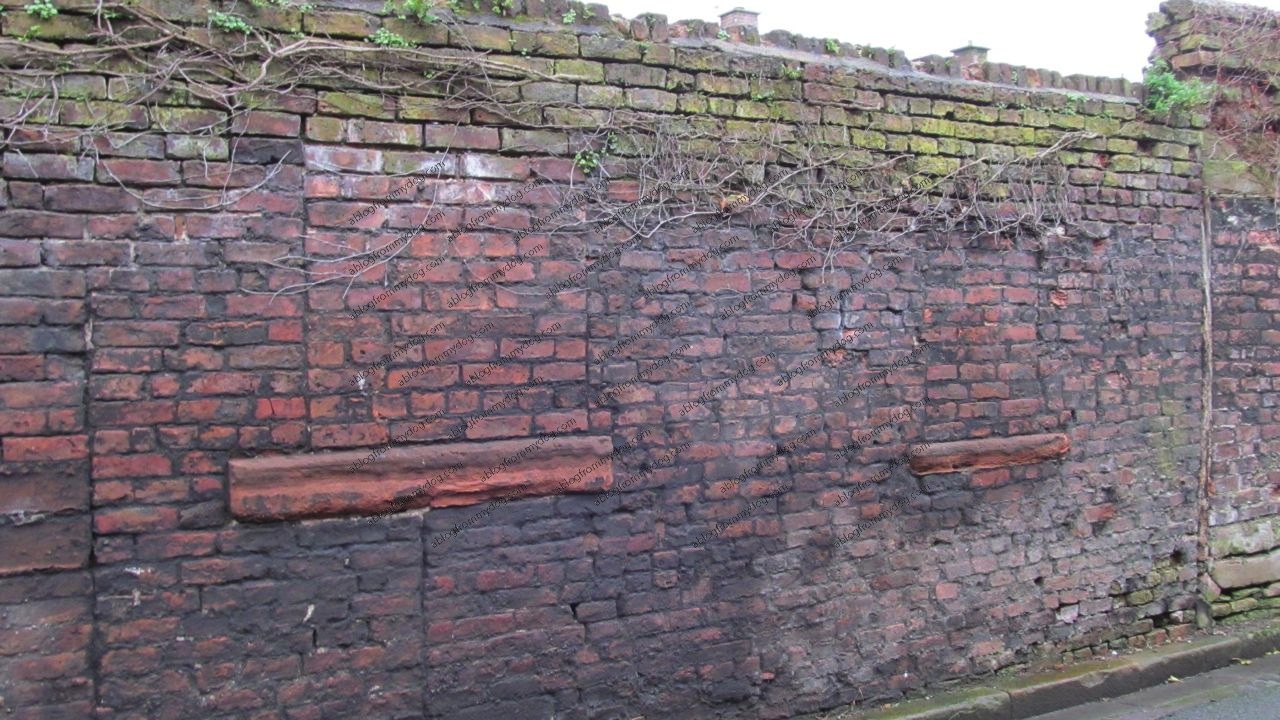
‘Innocent of sanitation’
Encapsulated in the assorted stones the ghostly outlines of doors and windows can still be made out. However, I can not find any evidence of the history of this wall.
Was it the frontage of a row of buildings now long gone or has it been constructed from the shattered remains of former houses destroyed over time? If you can add to the story of this street then let me know via the comments area below.
A former resident of Shaddongate, Sam Jordan, sent a letter to the local newspaper, The Journal, in 1894 about one courtyard off Broadguards.
In it he described the area as, “a mere aggregation of tumble-down rookeries,” before adding it was “innocent of sanitation, with pitfalls at every step.”
The area declined throughout the late 1800’s and into the early 20th Century.
The City Council minutes of 1931-32 indicate that a number of properties in the area were unfit for human habitation.
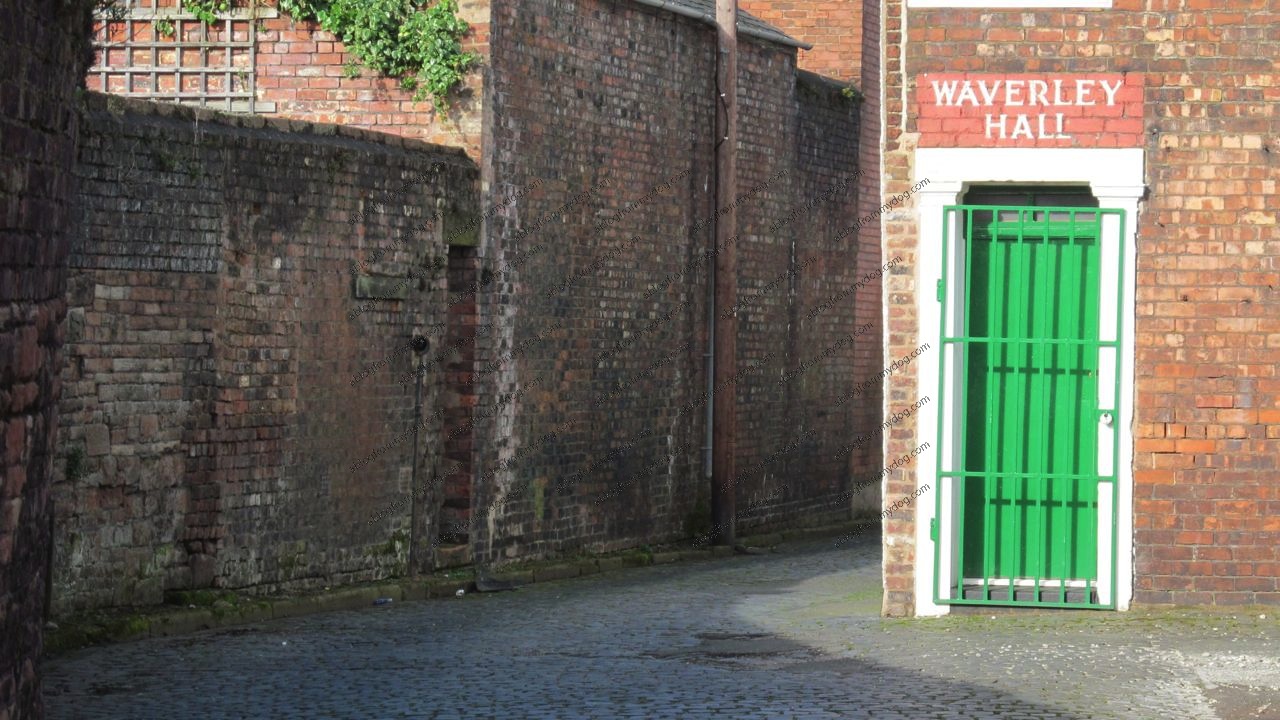
Waverley Hall, Caldewgate
Indicated only by a painted white sign above a metal gate, is the Waverley Hall.
The building is now in use by an engineering firm but was once a place of religion.
It is a few hundred metres along Broadguards from the McVities biscuit factory.
Little can be found about this building except for one note published in the London Gazette in 1955.
The official notice indicates that the building was given a certificate for worship on 19th July 1935. This certification was cancelled by The Registrar General on 21 January 1955.
Can you add to the history of this street or the buildings along it? Let me know in the comments area below.
Until next time
Charlie
My dad, Stanley, was born on this street, Broadguards, in 1930. The wall in the image is the wall he looked out from as a boy from his terraced house before it was demolished. At some time towards the end of the war or shortly after his family were relocated to a new council property on Ullswater Road in the city as his sister, Mary, had contracted TB (no doubt due to the fact that these condemned properties were so cold and damp and squalid). They were given priority to move to the new property due to the fact his sister’s condition was worsening, but unfortunately and very sadly his lovely, big sister died at only the age of 19. My dad speaks fondly of her. She was a clever girl, went to the Margaret Sewell School, swam for the city and became a teacher at a young age to cover for the teachers who were away helping the war effort. Mary did not die at Broadguards but not long after the move from Broadguards. His dad William was serving his country. Times were tough but neighbourly friendship was strong and a cup of sugar was often loaned. This is the street where my dad played as a boy, where his mother Martha would hand wash the clothes on a washboard and use the mangle to squeeze out the water and make wonderful socks from the wool unravelled from holey jumpers. He often remarks about the cold, flagstone floors, the linoleum table cloth and the cockroaches. Ice on the windows and sharing a bed with grandma and siblings was commonplace to avoid the winter cold conditions. My dad pulled himself out of this poverty which was often considered the norm in the 1930s and built himself a wonderful bungalow on the south side of the city where he still resides. His little sister Elsie lives a short drive away, she herself is now in her seventies. Tough times mixed with happy days and memories.